

Adéla
Pop’s rising provocateur
- zo 23 aug • 13:30 - 14:15 • Wave
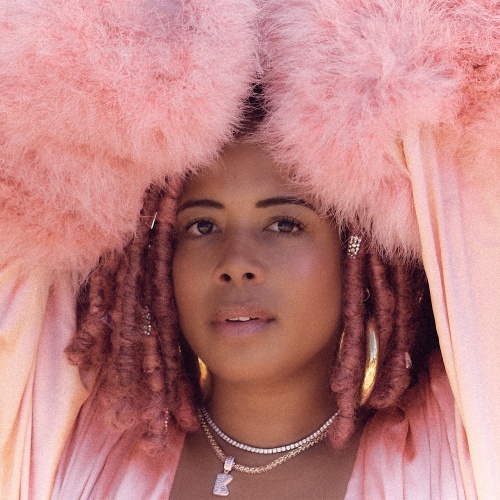
In a landscape often bound by formulaic conventions, ADÉLA emerges as an artist who refuses to conform. The 21-year-old singer doesn’t just make pop music — she distorts it, challenges it, and makes it feel larger than life, yet always rooted in unfiltered emotion. “I want to create a world that's relatable on a human level, ” she says. “I want to talk about things that are maybe uncomfortable. That’s who I am also as a person: I’m super blunt and kind of clinical, in a sense. Feelings, both positive and negative, hold the same weight to me. ”
That balance between grandeur and sincerity is central to her debut EP The Provocateur for Capitol Records. It tells the story of a woman who’s willing to do anything to become an entertainer, a dramatized yet deeply personal reflection of ADÉLA’s journey. Like dispatches from the frontlines of fame and ambition, each track marks a chapter in the character’s rise, from the feverish “Homewrecked” — a recounting of infidelity and betrayal — to the defiant “Superscar, ” a statement on power, exploitation, and perseverance. “It’s about messed up things happening to you when you want to do this, ” she explains. “It’s about her being like, ‘You didn't make me a superstar, you gave me a superscar. But I’ll keep going. ’”
On her EP track “MachineGirl, ” ADÉLA sharpens that narrative through its biting social commentary on the spectacle of female conflict — how, despite purportedly embracing a culture of “women supporting women, ” audiences still revel in watching them tear each other down. Produced and co-signed by Grimes, it’s satire drawn from ADÉLA’s own experience in the lion’s den, powered by high-voltage synths, vocoder harmonies, juvenile taunts, and her response to the drama: “Why you comin’ at me, baby? / Yell at the machine, girl. ”
ADÉLA knows what it means to be shaped by the machine and to fight against it. Raised in Slovakia, the singer, born Adéla Jergova, often felt at odds with her homeland’s conservative values. “In Eastern Europe, we often think in a very limited way, ” she says before elaborating. “We don’t see ourselves as worthy or able to achieve huge things because it simply has never happened before. ” Rather than allow others to discourage her childhood dream of becoming a pop star, she kept it to herself. ADÉLA channeled that energy into years of rigorous ballet training, her natural talent and unrivaled work ethic driving her to go professional at age 11. By 14, she had moved to Vienna and London to attend elite ballet academies, but when music’s pull became too strong to ignore, she left to pursue it full-time.
Outside of school, she studied American pop culture obsessively. “I was like, If I want to be on the Disney Channel, I need to be able to speak perfect English, " she says. So every day, ADÉLA taught herself by watching hours of makeup tutorials and celebrity interviews on YouTube, mimicking the way the people on screen spoke. She also took vocal lessons — going as far as successfully seeking out Olivia Rodrigo’s teacher — and eventually began songwriting as a means of processing the growing pains of adolescence.
In 2020, ADÉLA’s self-made education led her to her biggest challenge yet. She moved to Los Angeles to join the Dream Academy, where she competed for a spot in a global girl group — a years-long process documented in the Netflix series Pop Star Academy. It was a demanding yet invaluable experience that schooled her thoroughly in the principles of being a performer,reinforcing the discipline, resilience, and artistry she’d been perfecting since childhood. But after pouring everything she had into the competition, ADÉLA was ultimately eliminated. The aftermath was brutal. “The year that followed was the worst of my life, ” she says. “Seriously. It sucked. ” With no clear path forward, she took the time to experiment, make music, and rediscover who she was outside of the program. “I had to find my people, try different vibes, hair colors, clothes, and just live life. ”
ADÉLA emerged from that period of reinvention sharper, hungrier, and fully in control of her vision. She’s hands-on in every aspect of her work outside of her music, too, from video treatments and choreography to costuming and makeup — something she can credit to a lifelong study of her musical heroes, Beyoncé and Lady Gaga, and also her years in ballet watching how all the elements came together. As she steps into this new chapter of her career, she thinks back to her time rebuilding. Just as she had set out as a child to learn English and become a Disney star, she opened up a Google Doc and hatched a plan, starting with a written mission statement in answer to one specific question: What does ADÉLA, the artist, want?
“I just want to encourage people to fucking be themselves — unless you're a psychopath, ” she jokes, before thoughtfully adding: “If I do my job right, people will love these songs because they’ll find themselves in them. ”
The release of The Provocateur in August of 2025 confirmed ADÉLA’s arrival, garnering her praise from outlets such as Vogue, Interview Magazine, The FADER, Harper’s Bazaar, NYLON, Rolling Stone and PAPER Magazine, the last of which declared that her “fame comes at no surprise. ” With this acclaim in tow, ADÉLA quickly sold out her debut solo live performances in London, New York, and Los Angeles. Next year, she’ll take her electrifying stage presence on the road, opening for Demi Lovato on her North American tour starting April 2026. As her rapidly growing fanbase anxiously anticipates her next body of work, it’s clear to see that the sky is the only limit for the rising pop star.